
Rice Length Grader Machine: Working Principle & Benefits
Quick answer: A rice length grader machine separates finished milled rice into defined length fractions, such as head rice and different broken-rice grades. It normally works after whitening or polishing. The grader does not remove husk, stones or color defects; its job is to make each outlet more consistent and measurable. Buyers should compare screen arrangement, feed distribution, usable capacity, grade purity, carryover, access for cleaning and the agreed test method.
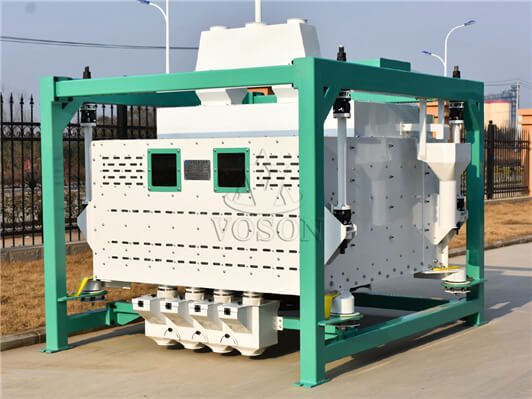
What a rice length grader machine does
After husking, whitening and polishing, the rice stream still contains kernels of different lengths. Head rice has a higher proportion of full-length kernels, while broken fractions are sold or processed under separate specifications. A grader divides this mixed stream so the mill can pack consistent grades, blend products deliberately and record recovery more accurately.
The required number of fractions depends on the buyer's market. A simple line may need head rice and one broken fraction. Another plant may require several broken grades for different customers. The equipment list should therefore start with the finished-product specification rather than a catalogue model alone. The MMJP white rice grading machine page shows the related commercial equipment, while this guide focuses on process function and acceptance.
Length grading, thickness grading and color sorting
| Process | Separation basis | Typical purpose | Buyer check |
|---|---|---|---|
| Length grading | Kernel length | Separate head rice and broken fractions | Required outlets, cut points, purity and carryover |
| Thickness grading | Kernel thickness | Remove thin or immature kernels and create thickness grades | Slot size, feed distribution and product variety |
| Color sorting | Optical appearance | Reject visible color or material defects | Defect sample, reject setting, air supply and throughput |
| Cleaning | Size, density, magnetism or airflow | Remove straw, stones, metal and field impurities before milling | Raw-paddy impurity and cleaning efficiency |
These stages are not interchangeable. A rice thickness grader may complement length grading, but it cannot replace it when the contract specifies broken rice by length. Likewise, a paddy vibrating screen belongs near the cleaning section and should not be presented as a finished-rice grader.
Working principle of rice length grading
The machine first distributes rice across the available grading surface. Controlled motion moves kernels over perforated screens or grading sections. The opening pattern and the movement of the product allow shorter kernels to pass through selected sections while longer kernels continue to another outlet. The internal arrangement differs by design, so buyers should ask for a flow diagram and outlet definition for the quoted model.
Stable feeding matters as much as screen size. If one side is overloaded, kernels can cover openings, reduce effective area and increase carryover into the wrong fraction. If the feed is too low or unstable, the result may look acceptable during a short demonstration but fail to represent normal production. The supplier should state whether rated capacity refers to clean milled-rice feed and under what product distribution the figure was tested.
Practical benefits for a rice mill
The first benefit is consistent product classification. When head rice and broken grades remain within agreed limits, the packing team can label products accurately and reduce rework caused by mixed fractions. The second benefit is production visibility: weighing each outlet gives the manager a clearer account of head-rice recovery and broken-rice distribution.
Grading also makes process problems easier to investigate. A sudden change in broken fractions may point to paddy condition, huller settings, whitening pressure, worn parts or handling damage upstream. The grader does not solve those causes, but reliable fraction data helps operators locate them. Review the rice polishing process when checking whether surface finishing or excessive pressure is affecting breakage before the grain reaches grading.
Where the grader fits in the process line
A common sequence is whitening, polishing, length grading, optional optical sorting, finished-product bins and packing. Some plants change the order or add bypasses because they produce several products. The layout must allow sampling at the inlet and every outlet, safe access to screens, removal of rejected material and cleaning between varieties.
Capacity should be balanced with the upstream mill and downstream packing section. A grader selected only from nominal throughput can become a bottleneck if the actual feed contains more broken rice, the screen arrangement is unsuitable, or outlets cannot discharge freely. Compare complete process stages in the types of rice milling machines guide, then use the rice mill machine category for individual equipment and the rice mill plant category for full-line configurations.
Buyer inputs required for correct selection
Send a representative milled-rice sample or a measured grain-length distribution when possible. State rice variety, incoming head-rice and broken-rice proportions, required finished fractions, hourly throughput, operating hours, voltage, available floor space and the equipment before and after the grader. Photos alone do not define the cut points.
Ask the supplier to identify the number of grading sections, outlet arrangement, screen access, drive and control scope, aspiration or dust connection if required, spare screens and wear parts. The quotation should also state whether platforms, chutes, bins, conveyors and electrical controls are included. This keeps the machine description aligned with the layout and installation boundary.
How to run an acceptance test
| Check | How to record it | What it reveals |
|---|---|---|
| Feed condition | Sample moisture, variety and incoming length distribution | Whether the test material matches the agreed basis |
| Throughput | Weigh feed over a timed, stable operating period | Usable capacity under the test condition |
| Mass balance | Weigh every outlet and compare the total with feed | Unmeasured loss, leakage or sampling error |
| Grade purity | Classify samples from each outlet with one agreed method | Whether each fraction meets its definition |
| Carryover | Measure misplaced long and short kernels | Screen, feed or adjustment performance |
| New breakage | Compare feed and combined outlet samples | Whether handling through the machine damages rice |
| Stability | Record vibration, blockage, motor load and interruptions | Whether the result can be maintained in production |
Use the same sampling method for supplier comparison. A short visual demonstration cannot replace a measured test because a small amount of rice may not load the screen like normal production. Keep retained samples, machine settings and the signed test record with the commissioning documents.
What automatic or intelligent grading should mean
Terms such as automatic or intelligent should be tied to visible functions. Depending on the quoted system, these may include controlled feeding, monitored motor load, alarms, recipe settings, interlocks or data recording. Buyers should ask which functions are actually included, which sensors are used, and what happens when an outlet blocks or feed changes.
Automation does not remove the need for samples. The control system can hold settings and report operating conditions, but grade purity still depends on the raw product, screen condition, feed distribution and cut-point selection. Require the same throughput and fraction test for an automated system as for a conventional one.
Cleaning, maintenance and operating checks
Operators should inspect screens, fasteners, bearings, drives, flexible connections and discharge chutes on a planned schedule. Product buildup or a damaged opening changes the effective separation. Screens should be cleaned with methods approved for the material and machine; improvised hard tools can damage openings and alter the cut.
Track grade purity and carryover during production rather than waiting for a customer complaint. When results change, check feed distribution, screen cleanliness, outlet flow and upstream breakage before changing several settings at once. Keep critical screens and drive parts identified in the spare-parts list.
How VOSON reviews a grading requirement
Our review begins with the incoming milled rice and the products the buyer intends to sell. We map the required fractions, position the grader within the process, check adjacent machine capacities and define a test method that can be repeated. This approach separates the process question from the commercial quotation and reduces ambiguity during commissioning.
Use the Rice Mill Project Planning Hub to organize process, layout and acceptance information, or send sample data, capacity, required grades, voltage and destination through Contact. For independent background on postharvest milling stages, consult the International Rice Research Institute Rice Knowledge Bank.
Rice length grader machine FAQ
What does a rice length grader separate?
It separates milled rice into fractions according to grain length, commonly including head rice and one or more broken-rice grades. The exact outlets and cut points depend on the screen arrangement and product specification.
Is a length grader the same as a thickness grader?
No. A length grader separates by grain length, while a thickness grader separates thin or immature kernels according to thickness. A plant may use both when the finished specification requires both controls.
Where should the grader be installed in a rice mill?
It normally works after whitening or polishing and before final sorting, blending, storage or packing. The exact sequence depends on the products the plant intends to sell.
How should grading performance be tested?
Use a representative feed sample, weigh every outlet, sieve or manually classify samples from each fraction, and record throughput, grade purity, carryover, new breakage and operating stability.
Can a grader improve milling recovery?
A grader does not create more rice. It measures and separates the recovery already produced by upstream machines, helping the operator control grade consistency and account for head rice and broken fractions accurately.
What information should a buyer send to the supplier?
Provide rice variety, incoming broken-rice distribution, required finished grades, hourly throughput, operating schedule, voltage, available space, upstream equipment and packing plan.