
Rice Mill Machinery: Functions, Applications and Buyer Guide
Quick answer: Rice mill machinery is a connected group of machines that prepares paddy and converts it into defined finished-rice products. Each machine has one process responsibility: cleaning removes foreign material, husking removes the hull, separation routes brown rice and unhusked paddy, whitening removes bran, grading separates sizes, sorting removes visual defects and packing prepares the product for sale. Buyers should specify inputs and outputs for every stage instead of purchasing isolated machines from a list.
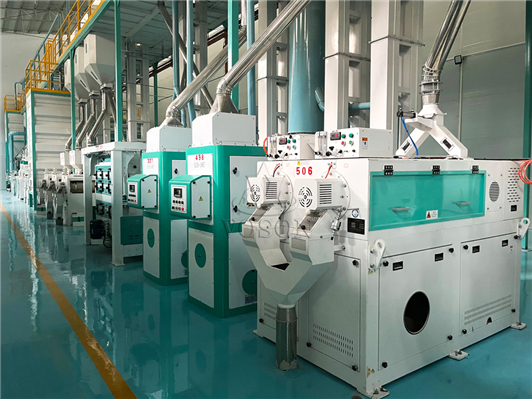
Rice mill machinery as a connected process
The value of machinery comes from the process result, not the number of machines installed. A large whitener cannot compensate for poor cleaning, unstable husking or a slow packing section. Every stage should be matched to the same paddy condition, capacity basis, operating schedule and finished-rice specification.
The IRRI commercial milling reference describes the multi-stage route from pre-cleaning through husking, separation, whitening, grading and bagging. This provides a useful process framework, while the actual equipment quantities and settings must be selected for the buyer's paddy and market.
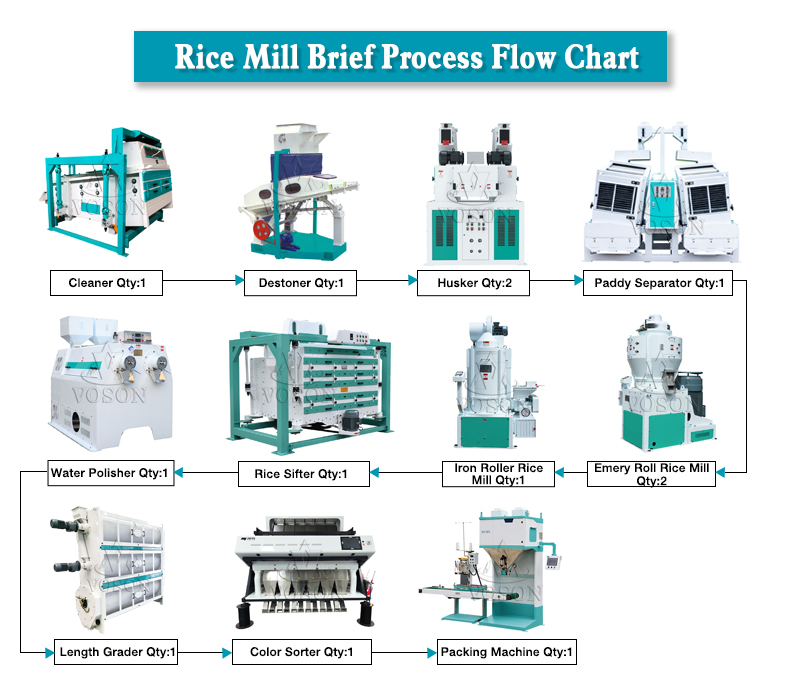
Rice mill machinery function map
| Process stage | Main machine function | Output or evidence to check |
|---|---|---|
| Paddy preparation | Remove straw, dust, stones, metal and other impurities | Clean-paddy sample and impurity-removal result. |
| Husking | Remove the outer hull while limiting grain damage | Brown rice, unhusked paddy, husk and broken-rice check. |
| Paddy separation | Separate brown rice from paddy that needs another hulling pass | Purity of brown-rice and return-paddy outlets. |
| Whitening | Remove the required amount of bran from brown rice | Milling degree, recovery, broken fractions and grain temperature. |
| Polishing | Remove loose bran and improve surface appearance where required | Appearance, temperature, moisture and recovery comparison. |
| Grading and sorting | Separate product sizes and remove defined visible defects | Grade fractions, sample standard and reject result. |
| Packing | Weigh, fill and close bags for storage or sale | Bag range, speed, weighing tolerance and closure quality. |
This page focuses on what each machine does and how stages connect. Use the types of rice milling machines guide when comparing alternative machine designs within a particular stage.
Paddy cleaning machines
A vibrating cleaning machine removes larger and smaller foreign material using selected screens and aspiration. A rice destoner separates stones and other heavy impurities that may remain similar in size to paddy.
Buyers should provide the input impurity range, paddy flow and cleaning target. Ask for screen specifications, aspiration scope, sampling points, cleaning access and the route for rejected material. Cleaning protects rollers, screens and downstream product quality.
Husking machinery
A rubber roller huller uses two rollers operating at different peripheral speeds to remove the hull through controlled friction. Feed stability, roller pressure, paddy moisture and roller wear influence hulling and breakage.
The quotation should identify roller size, pressure control, feed-control range, aspiration boundary and spare-roller plan. Husk should be removed through an air channel and transferred to a defined collection or handling system.
Paddy separation machinery
A paddy separator machine receives the brown-rice and unhusked-paddy mixture after husking. Brown rice moves toward whitening, while paddy returns for another controlled hulling pass. The separator does not remove bran and should not be confused with a rice grader.
Measure contamination in both outlet streams. Paddy escaping into brown rice disrupts whitening; brown rice returning with paddy adds unnecessary circulation. Feed distribution, deck settings, paddy condition and huller output should be checked together.
Rice whitening machines
A vertical rice mill or whitener removes bran from brown rice using controlled abrasive or friction action, depending on the machine and sequence. Commercial lines may use more than one pass to reach the required milling degree without excessive pressure in one machine.
Ask for the planned number of passes, feed rate, airflow, screen and abrasive specification, bran collection and sampling method. Record recovery, head rice, broken fractions, milling degree and grain temperature during acceptance.
Rice polishing machines
A rice polisher is used when the target market requires a cleaner or glossier surface. The process may use controlled air and a fine water or mist application, depending on the design. It should follow stable whitening rather than hide poor upstream adjustment.
Compare appearance, moisture, temperature and recovery before and after polishing. Confirm water control, compressed-air requirements, food-contact materials, cleaning procedure and the acceptable product sample.
Rice grading machinery
A rice grading machine separates head rice and broken-rice fractions according to the selected mechanism. A rice thickness grader separates grains by thickness and can remove immature or unsuitable grains for specific product targets.
Send the desired grade schedule and representative rice sample. Ask the supplier to show screen or cylinder specification, adjustment range, product outlets, expected flow and how grades will be collected without mixing.
Color sorting machinery
A rice color sorter uses cameras, lighting, software and ejectors to remove defects defined by the buyer. It does not replace physical cleaning, destoning or size grading. Performance depends on the defect, feed presentation, throughput and compressed-air quality.
Factory testing should use representative material and an agreed visible-defect definition. Record input, accepted product, rejects, throughput and the product recipe used during the test.
Rice packing machinery
A rice packing machine weighs and fills the required bag formats. The correct configuration depends on bag size, material, closure method, target bags per hour, weighing tolerance and manual or conveyor handling.
Packing can become the final bottleneck. Calculate bags per hour for each format and include product changes, label changes, rejected weights and finished-bag movement. Buffer bins should support short interruptions, not hide an undersized packer.
Conveying, bins and aspiration
Elevators, conveyors, chutes, bins, fans and ducts are not secondary accessories. They control material flow between process machines. A weak elevator, poorly designed chute or small bin can stop a line whose main machines are correctly sized.
The process drawing should show paddy, brown rice, white rice, finished grades, return material, husk, bran, dust and rejects as separate routes. Request capacities, elevations, outlet positions, supports and access for cleaning.
Controls and automation
Controls can regulate feed, monitor bin levels, protect motors, store product recipes and warn operators about blockage or overload. Automation should be selected from operating volume, labor, utility stability, maintenance skill and the value of repeatable product settings.
The modern rice milling machine guide covers process control and retrofit decisions. Modernization is useful when it solves a measured restriction; it is not a reason to add controls that local operators cannot maintain.
Match machinery to paddy and product
Send paddy variety, grain dimensions, moisture range, impurity, storage condition and representative samples. Define the required finished-rice recovery, head rice, broken fractions, milling degree, polish, visible defects, blending and packing.
Machine selection should follow these inputs and outputs. A plant serving one bulk-grade market needs a different finishing section from a plant producing several retail products. Optional machines should have a clear process or sales purpose.
Capacity and line balance
State whether capacity means paddy input or finished-rice output, and define operating hours. Each machine should show normal sustained capacity and motor power on the same basis. Internal return streams and multiple grades can add loads that are not visible in the headline number.
| Line-balance check | Question for the supplier | Risk if unclear |
|---|---|---|
| Cleaning | Can it handle peak impurity without slowing intake? | Unstable feed and unprotected downstream machines. |
| Husking return | Are huller, separator and return elevators sized together? | Internal circulation overload and production stops. |
| Whitening passes | How is flow divided across the planned machines? | Excess pressure, heat or uneven milling. |
| Sorting | Is sorter throughput based on the actual defect load? | High reject recirculation or reduced production rate. |
| Packing | Can all required bag formats handle finished output? | Full bins and upstream stoppages. |
Layout, utilities and maintenance
Request a dimensioned layout with machine footprints, elevations, foundations, platforms, stairs, openings and maintenance clearances. Confirm transformer, distribution, compressed air, process water, aspiration, dust collection and backup-power requirements locally.
Maintenance planning should identify wear parts, lubrication where specified, screens, rollers, abrasive parts, bearings, belts, sensors and packing consumables. Ask for part numbers, commissioning spares, operating spares and service intervals.
How to compare machinery quotations
| Document | Minimum content | Decision supported |
|---|---|---|
| Process flow | Machines, return streams, products, by-products and rejects | Whether the line can produce the requested rice. |
| Equipment schedule | Model, quantity, capacity, motor and contact materials | Technical comparison between offers. |
| Layout and loads | Dimensions, elevations, access, pits and foundations | Building feasibility and civil preparation. |
| Utility schedule | Power, air, water, aspiration and dust collection | Infrastructure scope before delivery. |
| Responsibility matrix | Freight, unloading, erection, wiring, training and spares | Total supplier and buyer boundary. |
| Acceptance protocol | Test material, runtime, throughput, recovery, grades and downtime | How performance claims will be verified. |
Supplier-ready inquiry
Prepare paddy data, capacity basis, shifts, finished-rice specifications, bag formats, voltage, site dimensions, existing equipment and service expectations. Browse the rice mill plant range and rice mill machine range to define the required functions.
Use the rice processing unit guide and Rice Mill Project Planning Hub, then send the process requirements, samples, destination and layout through Contact.
Rice mill machinery FAQ
What machinery is needed in a rice mill?
A commercial line normally needs cleaning, husking, paddy separation, whitening, grading, conveying and packing. Polishing and color sorting depend on the product specification.
Which machine should be selected first?
Define paddy input, operating hours and finished-rice products first, then design the connected process and select machines for each stage.
Is a rice whitener the same as a rice polisher?
No. A whitener removes bran to reach the milling degree. A polisher improves surface cleanliness or appearance after stable whitening.
Does every rice mill need a color sorter?
No. It should be selected from the visible-defect standard, throughput, market requirement and compressed-air availability.
What commonly creates a machinery bottleneck?
Undersized cleaners, return elevators, separators, sorters, bins, packing machines or utilities can limit the complete line.
What information is needed for a reliable quotation?
Provide paddy data, input or output basis, shifts, finished-rice grades, packing, voltage, building limits, automation preference and destination.