Paddy Separator Machine: Working Principle and Buyer Guide
A paddy separator separates brown rice from unhusked paddy after husking. Brown rice moves to whitening, while unhusked paddy returns to the huller for another controlled pass.


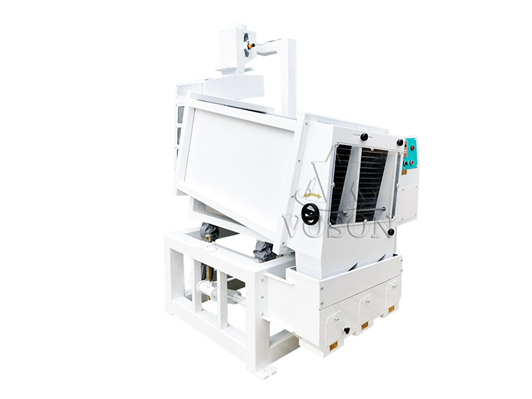
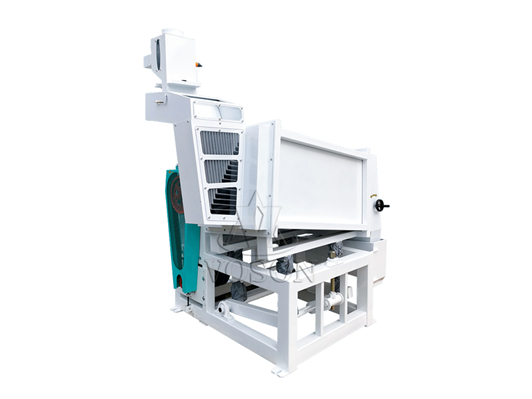
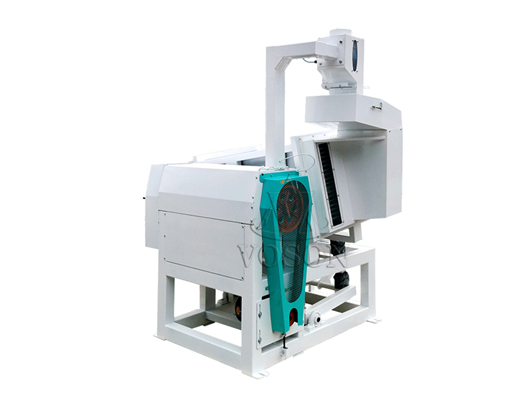
A paddy separator separates brown rice from unhusked paddy after husking. Brown rice moves to whitening, while unhusked paddy returns to the huller for another controlled pass.
Quick answer: A paddy separator machine separates brown rice from unhusked paddy after the huller. Brown rice moves to whitening, while unhusked paddy returns for another controlled pass through the huller. Separation depends on differences in surface friction, specific gravity and movement on an inclined oscillating deck. A buyer should compare actual separation results, feed stability, adjustment range, return flow and line balance rather than capacity alone.
After husking, the material is normally a mixture of brown rice and paddy that has not yet been husked. Sending this mixture directly into whitening would waste energy, create uneven processing and leave unhusked grain in the finished flow. The separator divides the mixture so each fraction follows the correct route.
The IRRI commercial milling process reference places paddy separation after husking and husk aspiration. In a complete plant, the separator must be matched with the rubber roller huller, return elevators and downstream rice whitener.
Brown rice and unhusked paddy differ in density, surface texture, shape and the way they move across a vibrating or reciprocating deck. When the feed is spread evenly across the inclined deck, the two materials follow different paths. Adjustable outlets collect the brown-rice stream and the paddy-return stream.
The machine is not a simple screen that separates only by size. Its performance depends on material behavior, deck motion, slope, feed rate and the position of the discharge dividers. Some designs also provide a mixed fraction that can be returned for another separation pass rather than forcing borderline material into either final stream.
| Input or output stream | What it should contain | Buyer check |
|---|---|---|
| Feed from husking | Brown rice and unhusked paddy after husk aspiration | Feed rate, moisture, variety and hulling consistency. |
| Brown-rice outlet | Brown rice ready for whitening with minimal paddy | Sample and count paddy remaining in the brown-rice stream. |
| Paddy-return outlet | Unhusked paddy sent back to controlled husking | Measure brown rice incorrectly returned with the paddy. |
| Mixed fraction | Borderline material needing another separation pass | Confirm where it returns and whether the flow is stable. |
Operators normally adjust the machine to the paddy variety, moisture and feed condition. The available controls vary by model, so the supplier should identify each adjustment and provide a starting method rather than a single universal setting.
| Adjustment area | What changes | What to observe |
|---|---|---|
| Feed rate | Material depth and distribution across the deck | Uneven or overloaded feed can mix the outlet streams. |
| Deck inclination | Material travel direction and residence time | Check purity of both brown-rice and paddy-return samples. |
| Stroke or vibration | Relative movement of the two grain fractions | Use the model's approved range and watch for unstable flow. |
| Outlet dividers | Boundary between brown rice, mixed material and paddy | Move only after sampling; do not judge from appearance alone. |
| Deck loading | How evenly the working surface is used | Empty and crowded areas indicate poor distribution. |
Record the settings used for each major paddy variety. A repeatable adjustment sheet is more useful than operators relying on memory, especially when moisture or crop source changes between batches.
A separator can appear to produce clean brown rice while still sending too much brown rice back to the huller. That repeated material may experience additional handling and increase unnecessary load. The reverse problem is paddy escaping into the whitening section.
During testing, take timed samples from both outlets after the machine stabilizes. Define how the samples will be weighed or counted and agree on the allowed paddy in brown rice and brown rice in the return stream. Record the feed rate and paddy condition with every result.
The separator receives the huller output, but returned paddy creates an internal circulation load. The supplier should calculate the expected return and confirm that the rice rubber rollers, huller, elevators and separator can handle it without backup.
Catalog capacity should name the feed material and test conditions. Ask for normal sustained flow, not only maximum capacity. For a capacity example, review how separator and return-flow checks fit into a 2 TPH rice mill plant.
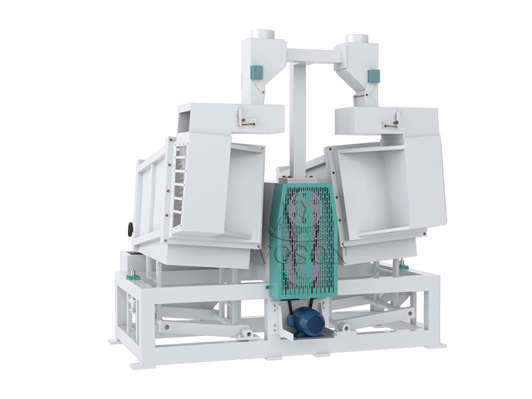
A compact single-body design can suit a smaller line when its separation area and capacity match the project. A double paddy separator provides twin working sections and may be selected for greater flow, stability or layout requirements. The correct choice depends on measured capacity and separation performance, not the number of decks alone.
Request dimensions, machine weight, motor data, feed and outlet positions, maintenance clearances and platform requirements. A larger separator is not useful if the building, elevators or return system cannot support it.
Mixed varieties, unstable moisture, excessive impurities and inconsistent hulling can make separation difficult. A well-selected paddy cleaning machine protects the huller and helps produce a more uniform feed to the separator.
Check the huller before blaming the separator. Worn rollers, poor feed control or weak husk aspiration may create an unstable mixture. Separator adjustment should be part of a connected process diagnosis, not an isolated response.
Brown rice leaving the separator should feed the whitening section at a stable rate. Paddy in this stream can interrupt the milling sequence and contaminate finished grades. Stable separation also helps the rice polishing section receive more consistent material.
Use the rice processing unit guide to review the entire path from cleaning to packing. The separator is one control point inside that larger system, not a standalone guarantee of final rice quality.
| Observed problem | Checks to make | Evidence to record |
|---|---|---|
| Paddy in brown rice | Feed distribution, deck setting, outlet divider and overload | Outlet sample, feed rate, setting and paddy condition. |
| Brown rice in return paddy | Divider position, slope, deck loading and mixed-fraction route | Return sample and estimated recirculation load. |
| Unstable outlet flow | Huller feed, elevators, inlet gate, drive and deck cleanliness | Flow changes, vibration, motor load and stoppages. |
| Capacity below expectation | Material basis, moisture, return load and upstream bottleneck | Timed input, outlet weights and effective runtime. |
| Noise or unusual vibration | Fasteners, bearings, drive, foundation and foreign material | Location, operating condition and maintenance action. |
Stop the machine and follow the manufacturer safety procedure before inspecting the drive, bearings or deck. Do not correct mechanical vibration only by changing process settings.
Daily checks should cover feed and outlet blockage, deck cleanliness, unusual noise and loose fasteners. Scheduled work may include drive inspection, bearing checks, lubrication where specified, deck condition and adjustment mechanisms.
Ask the supplier for a spare-parts list with part numbers, recommended quantities and replacement guidance. Keep records of cleaning, settings, sample results and failures so declining separation can be identified before it causes a production stop.
A complete quotation should state model, quantity, capacity basis, deck arrangement, motor, dimensions, weight, inlet and outlet positions, supplied controls, spare parts, installation boundary, warranty and commissioning support. Compare the machine together with its platform, chutes, elevators and return route.
Acceptance testing should record paddy condition, feed rate, effective runtime, brown-rice outlet purity, return-paddy purity, mixed fraction, motor load, vibration, adjustment settings and downtime. Keep signed samples and records after the machine has reached stable operation.
Prepare the huller model and capacity, paddy variety and moisture, expected return flow, target separation result, voltage, site layout and available height. For a new plant, browse the rice mill plant range and rice mill machine range.
The modern rice milling machine guide explains how separator data fits into wider process control. Use the Rice Mill Project Planning Hub, then send the project information through Contact for a capacity-matched recommendation.
It uses differences in density, surface friction, shape and movement on an inclined oscillating deck to separate brown rice from unhusked paddy.
It sends brown rice to whitening and returns unhusked paddy for controlled re-husking, preventing paddy from entering the finished-rice process.
Uneven feed, overload, unsuitable deck or divider settings, unstable moisture, mixed varieties, worn components or poor huller output can reduce accuracy.
Take timed samples from both the brown-rice and paddy-return outlets, then record contamination in each stream together with feed rate and settings.
Consider it when required capacity, separation stability, layout or line configuration cannot be met by the selected single-body model.
Provide huller capacity, paddy condition, return flow, target separation, voltage, layout, height limits, installation scope and destination.
Henan Voson Grain Engineering Machinery Co., Ltd. was established in 2014, and has been devoted to the research and development of rice mill machine...
More about the company →