
Rice Polishing Machine: How It Works & Buyer Checklist
Quick answer: Rice polishing is the finishing step after whitening that removes loose bran powder, smooths the grain surface and improves appearance. A rice polishing machine uses controlled feed, friction, airflow and, on wet polishers, a fine water mist. Good polishing improves surface finish without overheating the rice or causing unnecessary broken grain. The machine must therefore be selected and adjusted as part of the complete milling line.
What is rice polishing?
Rice polishing is not the same as removing the husk or whitening brown rice. Husking separates the husk from paddy. Whitening removes part of the bran layer from brown rice. Polishing follows whitening and focuses on the surface of the milled grain. It removes remaining powder, reduces surface roughness and can improve gloss for markets that value a clean, consistent appearance.
Polishing cannot correct poor upstream milling. Unevenly whitened rice, excessive broken rice, high grain temperature or unstable moisture will still limit the final result. The polisher should be matched with the whitener, grader and packing system, with enough buffer and conveying capacity to keep feed conditions stable.
How a rice polishing machine works
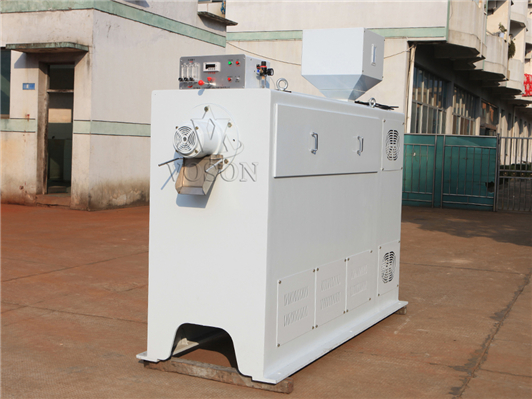
Whitened rice enters the polishing chamber through a controlled feeder. A rotating roller moves the rice through a screened chamber while grain-to-grain contact and controlled friction clean and smooth the surface. Air passes through the chamber to remove heat and fine bran powder. In mist-polishing designs, a measured amount of water is introduced and distributed over the rice surface before or during polishing.
The discharge gate creates resistance and controls how full the chamber remains. Feed rate, outlet resistance, roller speed, airflow and water addition work together. Increasing only one setting can create uneven finish, temperature rise or more broken rice. Operators should adjust the machine from measured product results rather than visual gloss alone.
Settings that control polishing quality
| Control point | What to monitor | Risk when incorrect |
|---|---|---|
| Incoming rice | Moisture, temperature, whiteness, variety and broken-rice level | Unstable feed produces inconsistent gloss and breakage. |
| Feed rate | Uniform tons per hour and chamber loading | Surging changes residence time and surface finish. |
| Outlet resistance | Chamber pressure, motor load and product temperature | Excessive resistance increases heat and broken rice. |
| Airflow | Cooling, bran removal and dust-collection performance | Low airflow leaves powder and allows heat buildup. |
| Water mist | Water quality, spray distribution and addition rate | Too much or uneven water can create spots and storage risk. |
| Wear condition | Roller, screen, nozzle, seals and bearings | Worn parts reduce consistency and increase downtime. |
Protecting head-rice yield
A brighter surface is not useful if polishing reduces saleable head rice. Compare input and output samples by weight, not only by appearance. Record broken-rice percentage, grain temperature, motor load and throughput at each trial setting. If breakage rises, check incoming fissures, moisture, feed stability, chamber pressure, worn parts and upstream whitening before increasing polish intensity.
Water and air requirements
Not every rice polisher uses the same water system. Confirm whether the proposed model is a dry or mist polisher and which water quality, pressure and filtration are required. Air supply must also match the chamber and dust outlet. The quotation should state whether the fan, mist system, controls, duct connection and related instruments are included.
Where the polisher fits in a rice mill
A common sequence is whitening, polishing, grading, color sorting and packing, but the correct arrangement depends on the product standard and number of stages. Some projects use more than one whitener or polisher to spread the work across several gentler passes. The supplier should explain the expected condition before and after every stage.
For line planning, compare available rice polisher options, the downstream rice grading machine and packing machine. The broader rice mill machine range helps buyers check whether conveyors, bins and adjacent equipment match the same throughput.
To check how polishing fits with cleaning, husking, separation, whitening, grading and packing, use the rice mill machinery functions guide before comparing polisher capacity and line balance.
How to select a rice polishing machine
Begin with the required finished-rice result, then work backward to the incoming rice condition and line capacity. A model name or nominal capacity alone is not enough. Send the supplier representative samples or clear test data and ask for the assumptions used in selection.
| Selection item | Information to provide | Evidence to request |
|---|---|---|
| Capacity | Required TPH, shifts, operating hours and adjacent-machine output | Rated input, motor load range and test conditions |
| Rice condition | Variety, moisture, temperature, whiteness and current broken rice | Recommended settings and sample-test result |
| Quality target | Surface finish, gloss, cleanliness and maximum breakage | Before-and-after samples with measured values |
| Utilities | Voltage, frequency, water, compressed air and dust collection | Utility schedule and included auxiliary equipment |
| Installation | Building limits, inlet height, outlet height and maintenance access | Dimensioned drawing, foundation loads and connection points |
| Service | Annual operating hours and local maintenance capability | Warranty process, manuals and recommended spare-parts list |
What to measure during a polishing trial
A useful factory or commissioning trial starts only after feed and machine conditions stabilize. Record the rice variety, input moisture, input temperature, throughput, water setting, motor load and outlet resistance. Compare input and output samples for broken rice, surface powder, visible defects, gloss or whiteness and product temperature.
Keep the accepted sample and setting sheet with the test record. This gives the operator a practical starting point and prevents later disagreement about the promised result. If the buyer processes several varieties, test the most important or most difficult material rather than assuming one setting fits every rice.
Maintenance and spare-parts planning
Daily work should include cleaning the chamber, checking the water and air paths, observing bearings and seals, and removing accumulated bran from the dust system. Screens, rollers and nozzles wear gradually, so declining output or uneven surface finish may appear before a complete failure. Maintenance intervals should follow operating hours and actual wear condition.
Before shipment, confirm the quantities and lead times for screens, rollers, nozzles, seals, bearings and other model-specific wear parts. Buyers can review the paddy and rice mill spare-parts section and include a first-year package in the quotation.
How VOSON reviews a polishing application
Our review begins with the incoming whitened rice and the buyer's finished-product standard. We check capacity balance, product moisture and temperature, required surface finish, acceptable breakage, available utilities and the machines before and after the polisher. The proposed trial then records both appearance and measurable operating results. This keeps machine selection tied to the full line rather than a catalogue capacity alone.
Use the Rice Mill Project Planning Hub for the complete equipment and site workflow. To request a model recommendation, send rice data, required capacity, product photos, voltage, destination and quality target through Contact. For independent background on milling stages, consult the International Rice Research Institute Rice Knowledge Bank.
Rice polishing machine FAQ
Is rice polishing the same as whitening?
No. Whitening removes bran from brown rice. Polishing improves the surface of rice that has already been whitened by removing loose powder and smoothing the grain.
Does a rice polishing machine always use water?
No. Some machines use a controlled water mist, while others use different polishing methods. Confirm the process, water quality and included supply system for the selected model.
Why can broken rice increase during polishing?
Common causes include fissured incoming rice, unsuitable moisture, excessive chamber resistance, high temperature, unstable feeding, worn parts or overly aggressive settings.
How should polisher capacity be specified?
State tons per hour of whitened rice entering the machine, daily operating hours and the capacities of the upstream whitener and downstream grader or sorter.
What should a buyer check in the quotation?
Check the feeder, motor, fan, water system, controls, screen, roller, dust connection, installation drawing, spare parts, test method and warranty boundary.
Which results should be recorded during commissioning?
Record input and output capacity, broken rice, rice temperature, moisture, motor load, water setting, visible surface quality and any downtime after conditions stabilize.