
Rice Mill Factory Setup Cost 2026: Machinery, Building and Utilities
A rice mill factory setup cost should be planned as a complete production project, not as a single machine price. Buyers often compare quotations too early, before the factory scope is defined. The result is a confusing price spread: one supplier may quote only core rice milling machines, while another includes elevators, bins, motors, dust control, packing, installation guidance and spare parts.
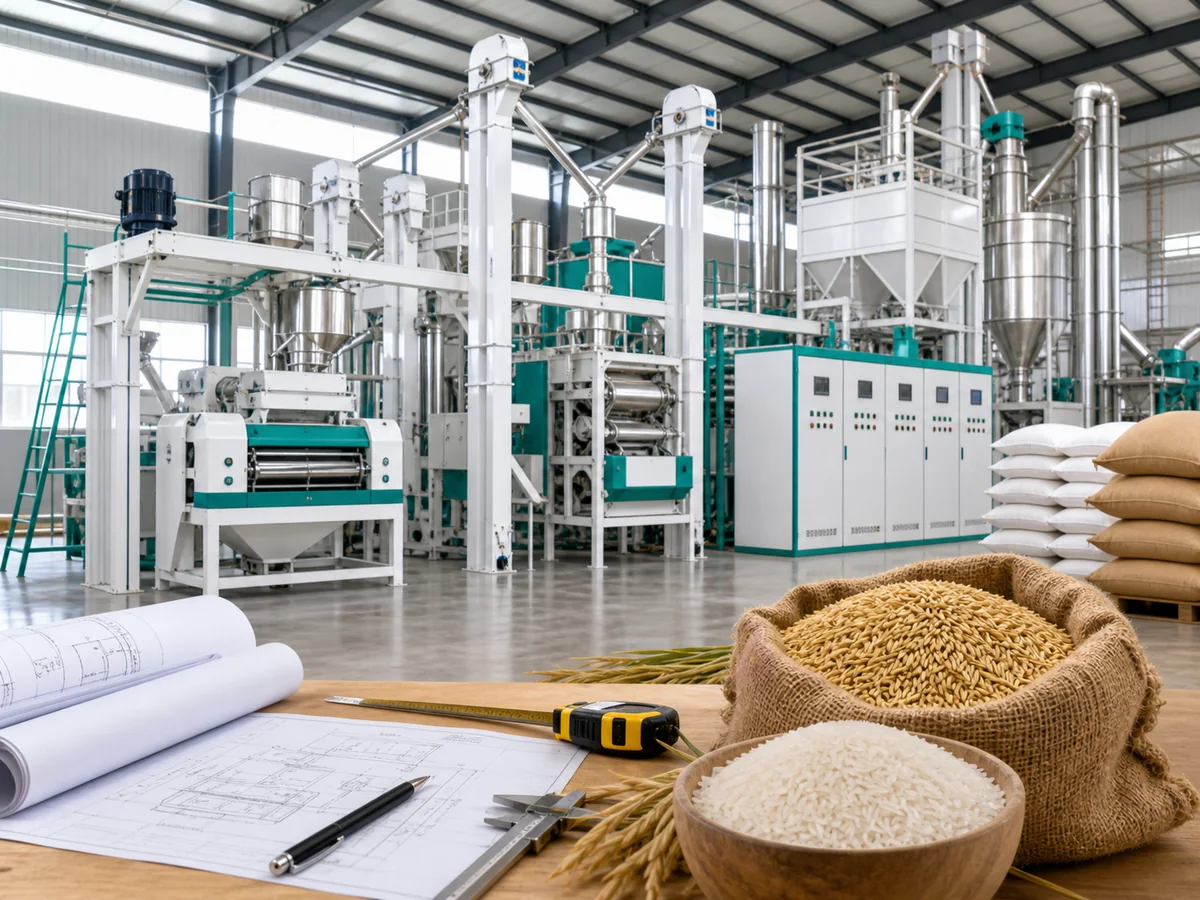
This guide gives buyers a practical way to prepare a factory budget before requesting quotations. It focuses on the cost items that usually change the real investment: machinery scope, building work, utilities, installation, storage and working capital.
Rice mill factory setup cost starts with the capacity basis
Before estimating cost, define the capacity basis. A factory can be described by paddy input per hour, finished rice output per hour, daily paddy intake, or daily finished-rice production. These numbers are not the same. Paddy condition, moisture, variety, broken-rice target and operating hours all affect the final output.
For example, a 5 ton rice mill project cost can change significantly if 5 tons means paddy input per hour instead of finished rice per hour. The quote should state the basis clearly, because it changes the size of the cleaner, husker, paddy separator, whitener, polisher, grader, elevators, bins and packing system.
| Capacity decision | What to confirm | Why it changes cost |
|---|---|---|
| Input or output basis | Paddy input, brown rice flow or finished-rice output. | Each basis creates a different machine size. |
| Working hours | Single shift, double shift or seasonal peak operation. | Daily output affects storage, labor and maintenance planning. |
| Rice quality target | White rice, polished rice, graded rice or color-sorted rice. | Higher market grade adds equipment and quality-control steps. |
| Moisture and impurity | Paddy moisture, dust, stones, straw and unfilled grains. | Cleaning, drying and pre-storage scope may increase. |
Main cost sections in a rice mill factory
A serious factory estimate should separate machinery cost from site cost. This helps the buyer compare suppliers fairly and also makes it easier to prepare local civil-work, electrical and installation budgets.
1. Rice milling machinery
The machine list usually includes paddy cleaning, de-stoning, husking, paddy separation, whitening, polishing, grading, conveying and packing. Larger factories may also need color sorting, automatic weighing, dust collection, silos, centralized control and extra bins.
Use the Rice Mill Machine category to compare process equipment and the Rice Mill Plant category when the project needs a complete line.
2. Rice mill construction cost: building and civil work
Factory cost includes more than the workshop shell. The buyer should check floor area, building height, foundation strength, steel platforms, equipment access, roads, drainage, raw paddy storage, finished rice warehouse and maintenance space. Civil work is often quoted locally, so it should be separated from the machinery quotation.
A practical rice mill construction cost estimate should price foundations, steel structure, equipment platforms, electrical rooms, paddy receiving, warehouses, drainage, dust control, roads and installation access separately. The machinery supplier can provide layout and load requirements, while a local contractor should confirm labor, materials and building-code costs.
3. Utilities and site systems
Power supply, transformer capacity, cables, compressed air, dust control, water, backup power and lighting can become major cost items. A factory quotation should include motor power and site requirement data so the buyer can ask local contractors for realistic numbers.
4. Drying and storage
If paddy arrives with high moisture or seasonal intake is concentrated, drying and storage need separate planning. Grain dryers and silos are not optional extras for every project, but they can protect quality and stabilize the milling line when paddy supply is inconsistent.
For these sections, compare Grain Dryer and Grain Silos options before finalizing the factory budget.
5. Installation, trial run and spare parts
Installation cost depends on who provides supervisors, who handles local labor, whether the site is ready, and how much training is included. Spare parts should also be planned before startup. Rubber rollers, screens, bearings, belts and common wear parts can protect production during the first harvest season.
The Paddy Spare Parts category is useful when preparing the first-year spare-parts list.
Factory setup cost checklist for supplier quotations
| Quotation section | Ask the supplier to state | Buyer evidence to prepare |
|---|---|---|
| Capacity basis | TPH or TPD, paddy input, finished-rice output and operating hours. | Paddy supply plan, target output and shift schedule. |
| Machine scope | Full model list, motor power, process flow, auxiliary equipment and packing scope. | Finished-rice standard, bag size and automation expectation. |
| Site requirement | Building size, equipment layout, power, air, dust collection and water requirement. | Site drawing, local utility conditions and civil-work budget. |
| Delivery boundary | Freight term, loading scope, installation guidance and trial-run support. | Destination port, local transport plan and site readiness date. |
| Operating support | Spare parts, training, manuals, warranty and maintenance plan. | Local technician plan and yearly maintenance schedule. |
How to keep rice mill factory setup cost under control
The best way to reduce cost is not to remove important process steps. It is to match equipment to the real market target. A factory selling ordinary local white rice may not need the same polishing, grading, sorting and packing system as a factory targeting premium retail rice. A buyer should define the final product first, then choose the process flow.
When comparing quotes, ask every supplier to use the same capacity basis, paddy condition, process flow, automation level, packing method and installation boundary. This makes the price comparison much more useful. If one quote is much lower, check whether civil work, motors, elevators, packing, dust control, spare parts or installation support were excluded.
For a broader planning path, use the Rice Mill Project Planning Hub, the rice mill project cost guide, the 4 ton rice mill project cost guide and the 100 ton rice mill project cost guide.
Reference for post-harvest planning
For general post-harvest process context, buyers can also review the FAO post-harvest operations reference. Use external references for process understanding, then confirm machine configuration, local site work and quotation scope with the supplier.
For a supplier-ready budget worksheet, use the rice mill cost estimation 2026 guide to compare capacity basis, machinery scope, civil work, delivery, installation and spare-parts assumptions before asking for final supplier pricing.
Rice mill factory setup cost FAQ
What is included in rice mill factory setup cost?
It should include machinery, building work, utilities, installation, freight, spare parts, storage, trial run and working capital. A machinery-only quote is not the full factory setup cost.
Why do rice mill factory quotes differ so much?
Quotes differ because suppliers may use different capacity bases, process flows, automation levels, auxiliary equipment, packing scope and installation boundaries.
Is a 5 ton rice mill project cost based on input or output?
It depends on the quotation. Buyers should ask whether 5 tons means paddy input per hour, finished rice output per hour or daily production.
Should civil work be included in the supplier price?
Many machinery suppliers provide layout and foundation guidance, while local civil work is priced by local contractors. The boundary should be written clearly in the quote.
How can buyers reduce setup cost without hurting quality?
Define the target market first, then select only the process sections needed for that rice grade. Removing key cleaning, husking, polishing or grading steps can reduce yield and quality.
What information is needed for a reliable factory quote?
Send paddy variety, moisture, impurity level, target output, finished-rice standard, packing method, site country, voltage, building size and installation expectation.
How should rice mill construction cost be estimated?
Estimate foundations, factory structure, platforms, warehouses, roads, drainage, electrical rooms and installation access separately. Use supplier layout and load data, then obtain local civil-work prices for labor, materials and building-code requirements.
For a supplier-ready quotation, send capacity basis, paddy condition, desired rice grade, site country, voltage, packing method and installation expectation through Contact.