
Rice Mill Cost Estimation 2026: Budget Template and Quote Checklist
A rice mill cost estimation is useful only when every supplier is quoting the same project boundary. A low number can look attractive, but it may exclude site work, elevators, electrical cabinets, bins, packing equipment, installation support, spare parts, freight or working capital. For a factory owner or project buyer, the goal is not to find the smallest line item. The goal is to understand the full budget before civil work starts.
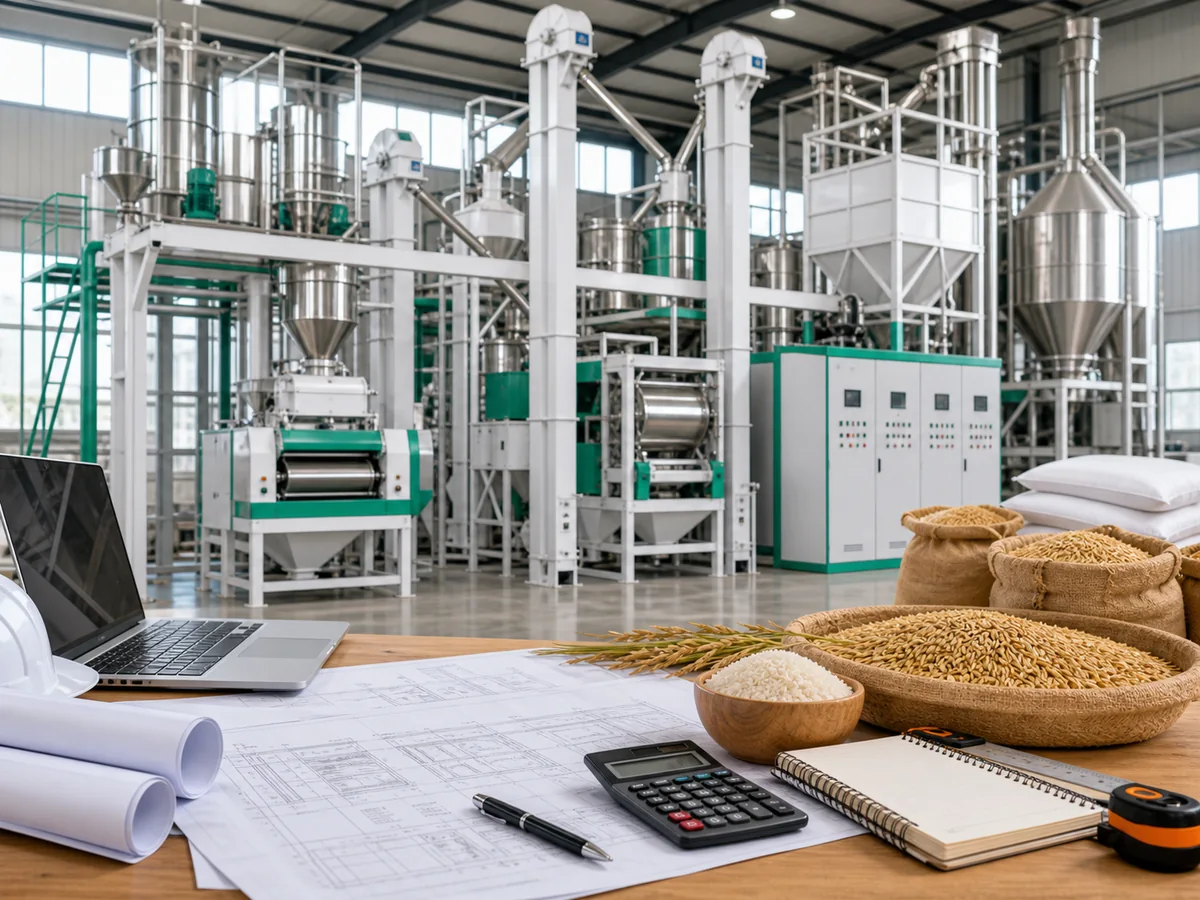
This 2026 checklist is written for buyers comparing rice mill plant quotations. It focuses on practical evidence: capacity basis, paddy condition, required rice quality, factory layout, voltage, packing method, installation boundary and the items that are often missed in early budgets.
Start with capacity before asking for price
The first step is to define capacity clearly. A quote based on paddy input is not the same as a quote based on finished rice output. A daily capacity target is also different from an hourly line capacity. Moisture, impurity level, milling recovery and working hours all change the final equipment selection.
If a buyer asks three suppliers for a rice mill cost estimation without defining the capacity basis, the answers will not be comparable. Ask each supplier to state whether the estimate is based on paddy input per hour, finished rice output per hour, or daily output.
| Capacity question | What the buyer should confirm | Why it affects the estimate |
|---|---|---|
| Hourly or daily target | TPH, TPD, working hours and seasonal peak load. | Changes machine size, storage plan and labor arrangement. |
| Paddy input or finished rice output | The exact basis used by the supplier. | Finished rice output depends on recovery rate and paddy quality. |
| Target rice grade | Local market rice, retail-grade rice, sorted rice or premium packed rice. | Changes whitening, polishing, grading, color sorting and packing scope. |
| Paddy condition | Moisture, impurity, variety and broken-rice tolerance. | May require drying, stronger cleaning or different process settings. |
What belongs in a rice mill cost estimation
A complete estimate should separate machinery, site work, delivery, installation and startup items. This makes it easier to compare supplier quotations and prevents one missing cost section from appearing later during construction.
| Budget section | Typical items | Buyer evidence to prepare |
|---|---|---|
| Process equipment | Cleaning, destoning, husking, paddy separation, whitening, polishing, grading and packing. | Paddy sample, target rice quality, capacity basis and finished product standard. |
| Auxiliary systems | Elevators, conveyors, bins, dust control, air system, electrical cabinet and optional automation. | Factory layout, floor height, power supply and automation expectation. |
| Building and civil work | Foundation, platform, drainage, warehouse, roads, unloading area and maintenance space. | Site drawing, building size, local construction estimate and schedule. |
| Delivery and import | Freight, insurance, port charges, inland transport, customs duty and unloading. | Destination port, trade term, local import cost and transport route. |
| Installation and trial run | Engineer guidance, local labor, tools, test paddy, training and acceptance test. | Site readiness date, local team, responsibility matrix and test standard. |
| First-year operation | Spare parts, consumables, maintenance plan, packaging bags and working capital. | Operating plan, harvest season, spare-parts list and sales cycle. |
Machinery scope is where many estimates change
A basic rice mill line may include cleaner, destoner, husker, paddy separator, whitener, polisher, grader and packing machine. A more complete line may add color sorter, length grader, thickness grader, automatic weighing, larger bins, stronger dust collection and a more advanced control system.
For machine-level comparison, review Rice Mill Machine. For complete plant planning, review Rice Mill Plant. Buyers comparing smaller projects can also use the 5 ton rice mill project cost guide as a capacity-specific reference.
When to include drying and storage
Drying and storage are not always included in an early machinery quote, but they can be essential when paddy arrives wet, seasonal intake is heavy, or the plant needs stable quality before milling. Leaving them outside the first estimate can make the project look cheaper than it really is.
Before finalizing the budget, compare Grain Dryer options and Grain Silos if the plant needs moisture control, buffer storage or harvest-season intake planning.
How to compare supplier quotations fairly
Put all supplier offers into the same table. Separate included items, excluded items and buyer-side costs. A quote that includes installation guidance, spare parts, motors, packing, dust control and electrical cabinets may look higher at first, but it may be more complete than a cheaper machine-only list.
For a broader cost view, compare the rice mill project cost guide, the rice mill factory setup cost guide and the 100 ton rice mill project cost guide.
Quote checklist for buyers
Before requesting a final quotation, prepare paddy variety, paddy moisture, impurity level, desired finished rice grade, expected output, working hours, power supply, factory layout, packing method and destination country. If the project includes local civil work, ask the machinery supplier for layout and foundation guidance, then price construction locally.
For spare-parts planning, review Paddy Spare Parts. For supplier feedback on your project boundary, send the same information through Contact.
Reference for process planning
For general post-harvest process background, buyers can review the FAO post-harvest operations reference. Use it as process context, then confirm the actual configuration, capacity and site requirements with the equipment supplier.
For buyers planning a smaller entry-level line, compare the 1 ton rice mill project cost guide before scaling up to larger capacity proposals. This helps separate small-workshop costs from industrial-plant assumptions.
Rice mill cost estimation FAQ
What is the first step in rice mill cost estimation?
Define the capacity basis first. A supplier should state whether the estimate is based on paddy input, finished rice output, hourly capacity or daily capacity.
Why do rice mill estimates differ so much?
Estimates differ because suppliers may include different machine scope, auxiliary equipment, automation level, delivery terms, installation support and spare-parts packages.
Should civil work be included in the estimate?
Civil work should be included in the total project budget, but it is often priced by a local contractor. The machinery supplier can provide layout and foundation guidance.
How do buyers estimate working capital?
Buyers should consider paddy purchase, packaging bags, labor, electricity, maintenance parts, storage time, customer payment terms and the expected sales cycle.
When should dryer and silo cost be included?
Dryer and silo cost should be included when paddy is wet, intake is seasonal, storage time is long, or the plant needs stable moisture before milling.
What information is needed for a reliable supplier quote?
Send capacity basis, paddy condition, finished-rice target, site country, voltage, building size, packing method, automation level and installation expectations.
A useful rice mill cost estimation is not a single number. It is a checked project boundary. Once the buyer and supplier agree on capacity, process flow, site conditions and startup support, the quotation becomes easier to compare and easier to execute.