Rice Thickness Grader: HS400-HS1000 Specs and Selection
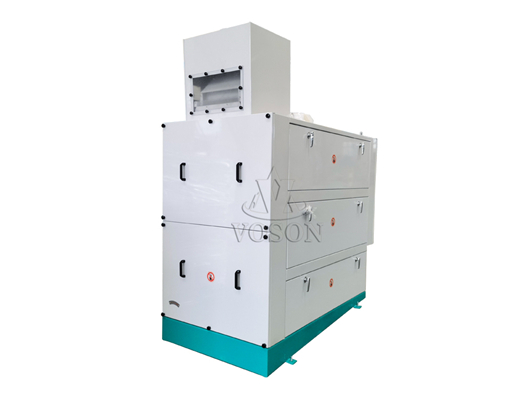
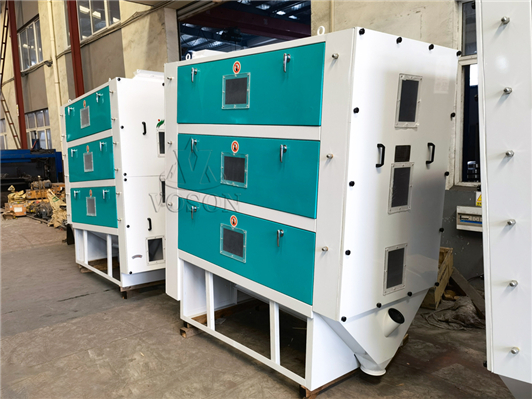
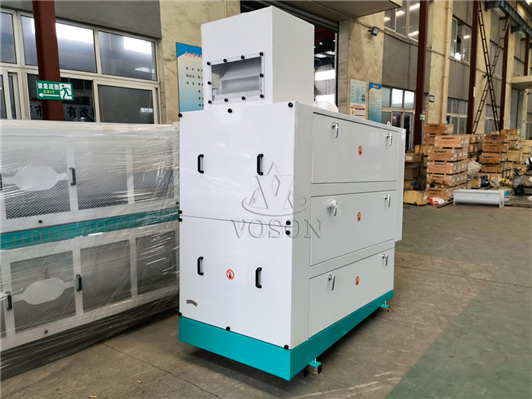
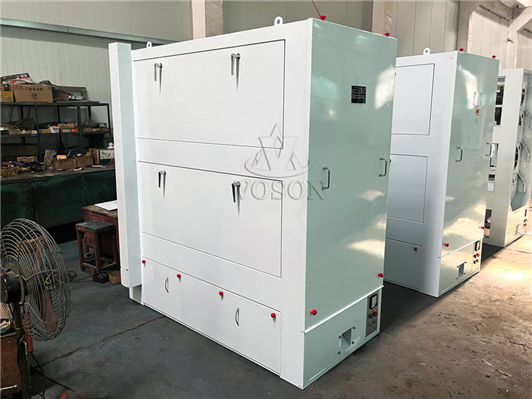
This rice thickness classify machine is one of the rice processing machines used in rice mill plant. The client can choose to use in the rice mill production line, for some clients may have different kinds of rice mix together.
Quick answer: The VOSON HS series rice thickness grader separates rice by grain thickness to remove immature, thin, broken or off-size material and improve finished-grade consistency. Published models range from HS400 at 4-5 t/h to HS1000 at 9-10 t/h. Model selection should match the rice sample, screen requirement, upstream flow and downstream sorting or packing capacity.
Rice thickness grader used before final sorting or packing according to the process target.
HS series rice thickness grader specifications
Model
Capacity
Power
Dimensions
Weight
HS400
4-5 t/h
1.1 kW
1900 x 1010 x 1980 mm
500 kg
HS600
6-7 t/h
1.1 kW
1900 x 1010 x 2385 mm
700 kg
HS800
7.5 t/h
1.5 kW
1900 x 1130 x 2715 mm
900 kg
HS1000
9-10 t/h
2.2 kW
1900 x 1200 x 2800 mm
1050 kg
These are published equipment values. A quotation should confirm the capacity basis, rice condition, screen configuration, voltage, motor standard, inlet and outlet arrangement, and any platform or elevator required for the specific project.
What a rice thickness grader does
A thickness grader separates kernels according to cross-sectional thickness rather than length or color. Rice enters the grading section and contacts a selected screen surface. Thin or undersized material passes through the screen openings while thicker kernels follow a different discharge path.
This separation can remove immature, chalky, thin or broken material before final grading and packing. The result depends on the grain variety, moisture, screen opening, feed uniformity and machine loading. Buyers should evaluate representative samples instead of selecting a screen from a product name alone.
Thickness grading versus other rice grading machines
Equipment
Primary separation basis
Typical quality purpose
Rice thickness grader
Kernel thickness
Remove thin, immature or off-size grains.
Length grader
Kernel length
Separate head rice from different broken-rice lengths.
Clean or classify material at an earlier process stage.
These machines do not replace one another. A commercial line may use several grading methods because thickness, length, size and visible defects are different quality measurements. The correct sequence follows the buyer's finished-rice specification.
How the HS series fits into a rice mill line
The thickness grader is generally used after whitening or rice polishing and before final optical sorting or packing, although the exact position depends on the process objective. It needs steady feed from an elevator or buffer bin and separate discharge routes for accepted and removed fractions.
Check the height and connection of upstream and downstream equipment before installation. The published machine height ranges from 1980 mm to 2800 mm, so the layout should allow safe access, screen removal, cleaning and discharge chutes without interfering with walkways or other machines.
Choose the model from line balance
Start with the normal operating flow, not only the highest catalog capacity. A thickness grader selected too close to its maximum can become a bottleneck when feed varies or screens require cleaning. A very large model may also operate poorly if it receives an uneven or insufficient feed.
Selection check
Buyer information
Decision supported
Normal flow
Hourly rice feed after polishing
Choose HS400, HS600, HS800 or HS1000 capacity class.
Peak flow
Short-term surges and upstream buffer behavior
Set practical capacity margin.
Rice sample
Variety, moisture and thickness distribution
Select screen opening and test separation.
Product grades
Accepted fraction, removed fraction and value of each
The screen opening determines which kernels pass through. A screen that is too open can remove saleable rice, while one that is too restrictive may leave thin or immature grains in the accepted product. The supplier should review a representative sample and the buyer's target grade before confirming screen specifications.
During a test, weigh the feed, accepted fraction and removed fraction. Inspect each fraction for whole rice, broken rice, thin grain and unwanted material. Record throughput and product loss after operation is stable. If several rice varieties are important, test more than one sample or specify spare screens.
Operation and maintenance
Feed should be distributed evenly across the working surface. Operators should watch for overloaded areas, blocked openings, abnormal noise and changes in product split. Sampling at regular intervals is more useful than assuming the initial setting remains correct throughout a shift.
The published features include chain drive and a durable screen structure. Maintenance planning should still cover chain condition, bearings, fasteners, screens, cleaning access and dust removal. Spare screens should be stored carefully so their openings and frames are not damaged.
Quotation and acceptance checklist
Request the model, capacity basis, motor power, dimensions, weight, screen quantity, screen specification, inlet and outlet sizes, drive details, supplied chutes, spare parts, packing, delivery term and warranty. Also confirm whether elevators, platforms, controls and local electrical installation are included.
The acceptance test should use agreed rice and screen conditions. Record input rate, accepted output, removed fraction, separation accuracy, product loss, motor operation, vibration, noise and test duration. The result should show whether the machine meets the target grade without creating an unacceptable loss of saleable rice.
For budgeting beyond the machine price, review the rice processing plant cost guide and Rice Mill Project Planning Hub. To request a model and screen recommendation, send rice samples or thickness data, hourly flow, target fractions, voltage, downstream equipment and layout through Contact.
Rice thickness grader FAQ
What is a rice thickness grader used for?
It separates rice by kernel thickness to remove thin, immature, broken or off-size material and improve grade consistency.
Is a thickness grader the same as a length grader?
No. A thickness grader separates by cross-sectional thickness, while a length grader separates kernels by length.
What capacities are available in the HS series?
Published capacities range from 4-5 t/h for HS400 to 9-10 t/h for HS1000, with HS600 and HS800 between them.
Where is the machine installed in a rice mill?
It is commonly positioned after whitening or polishing and before final sorting or packing, subject to the required process flow.
How should a screen be selected?
Use representative rice samples, thickness distribution, desired accepted fraction and allowable product loss to confirm the opening.
What should a buyer send for a quotation?
Provide rice variety, sample or thickness data, hourly capacity, target grades, upstream and downstream equipment, voltage and layout.