HZXZ Rice Mill Vibrating Screen: Selection Guide
HZXZ Series Rotary Vibrating Screen is one of the rice milling machines mainly used in the rice processing plant to clean the paddy.

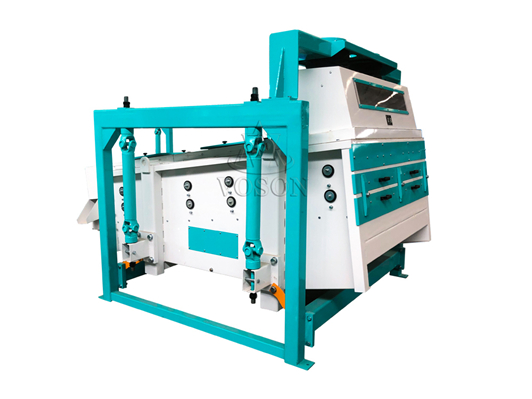
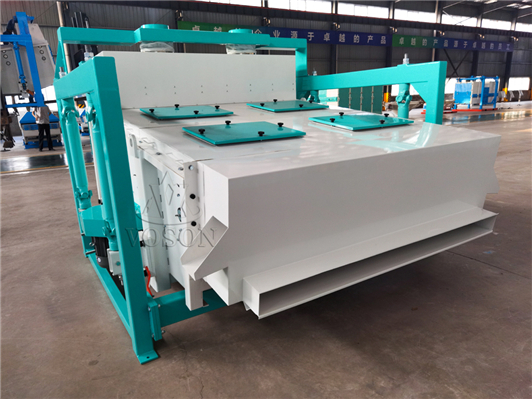
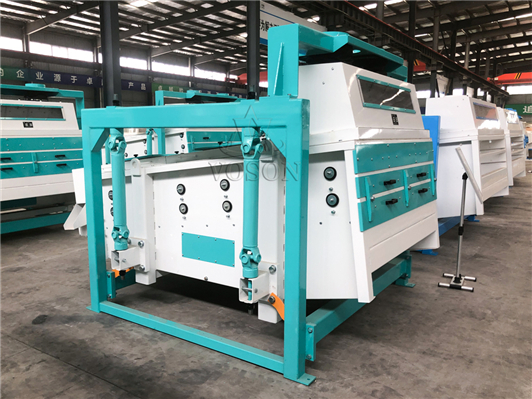
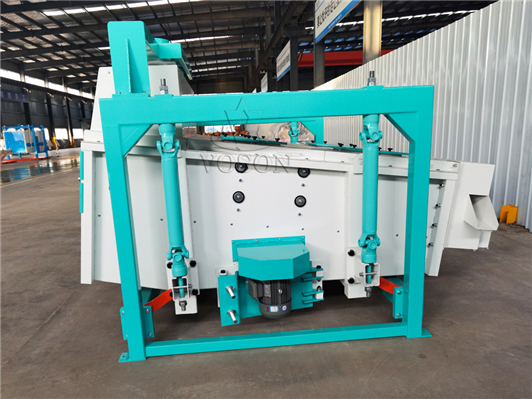
HZXZ Series Rotary Vibrating Screen is one of the rice milling machines mainly used in the rice processing plant to clean the paddy.
HZXZ Series Rotary Vibrating Screen Technical parameter:
| Model | HZXZ150*200 | HZXZ150*250 | HZXZ200*260 | HZXZ200*300 | TQLG200*360 |
|---|---|---|---|---|---|
| Capacity(t/h) | 25-35 | 30-40 | 45-60 | 50-65 | 55-70 |
| Power(kw) | 2.2 | 3 | 4 | 4 | 4 |
| Dimension(mm) | 2975*1950*1610 | 3500*2020*1925 | 3700*2760*2000 | 4210*2760*2100 | 4700*2760*2100 |
HZXZ Series Rotary Vibrating Screen Product features
The rotary vibrating screen is mainly used for the initial cleaning of large output of rice and wheat before entering the warehouse, the cleaning of drying feed, and the processing and cleaning of the pipeline of the rice processing workshop. It can be suitable for all kinds of rice, various scenes, and various requirements of rice and wheat cleaning. It is very popular in rice processing plants.
It has some features:
-Working for grain cleaning in grain processing plants and grain storage in the same warehouse.
-Excellent results, robust design, low wear and minimal maintenance.
-It can be used flexibly with a variety of different wind selectors to optimize the cleaning effect.
A rice mill vibrating screen removes large and small impurities before paddy moves to destoning, husking, and milling. Good cleaning protects the huller, whitener, polisher, elevators, and sorter from stones, straw, dust, oversized material, and broken foreign objects. The screen should be selected from paddy condition and line capacity, not from model name alone.
| Selection item | Buyer question | Effect on production |
|---|---|---|
| Capacity | What paddy input rate can the screen handle continuously? | Prevents cleaning from becoming the bottleneck of the mill line. |
| Sieve layers | Which screen openings remove large, fine, and mixed impurities? | Improves cleaning efficiency and protects downstream machines. |
| Air separation | Is aspiration included for light impurities and dust? | Reduces husk, chaff, dust, and light foreign material before milling. |
| Maintenance access | How quickly can operators clean or replace sieves? | Controls downtime during harvest-season operation. |
| Dust outlet | How does the screen connect to fans, ducts, and cyclones? | Improves workshop cleanliness and worker conditions. |
| Line balance | Does the screen match elevators, destoner, huller, and packing speed? | Keeps the complete process stable rather than overloading one machine. |
The vibrating screen normally works near the start of the cleaning section. In a complete line, it connects with a rice destoner, rubber roller huller, paddy separator, and later polishing or grading equipment. For full line planning, compare the rice processing unit workflow and 2 TPH rice mill selection guide.
When requesting a quote, send paddy photos, impurity type, moisture, hourly capacity, voltage, dust-collection requirement, and layout limits through Contact.
No. A vibrating screen removes size-based impurities, while a destoner separates stones and heavy impurities by density and airflow.
Provide paddy capacity, impurity type, moisture, required cleaning efficiency, voltage, and dust-control requirements.
Cleaning frequency depends on impurity load, moisture, operating hours, and screen opening size. Operators should inspect screens during each shift.
Yes, but the model and sieve area should match the line capacity so the cleaner does not become oversized or underpowered.
Henan Voson Grain Engineering Machinery Co., Ltd. was established in 2014, and has been devoted to the research and development of rice mill machine...
More about the company →