Double Paddy Separator: Capacity and Selection Guide
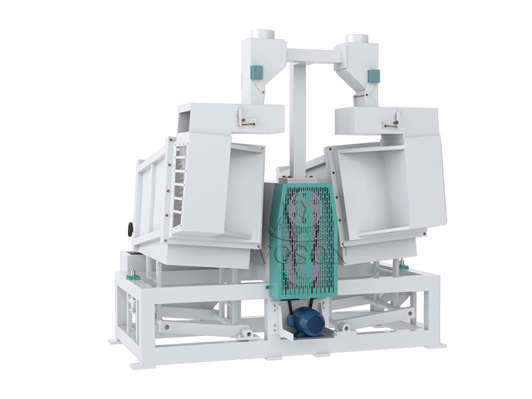
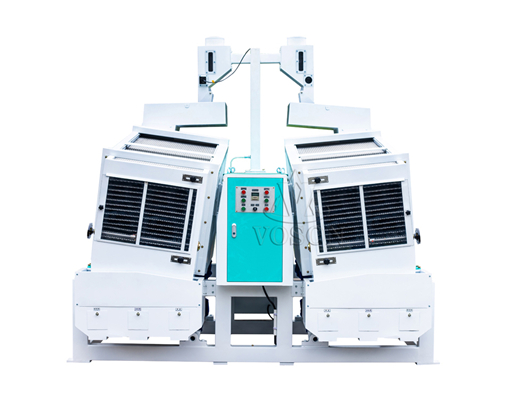
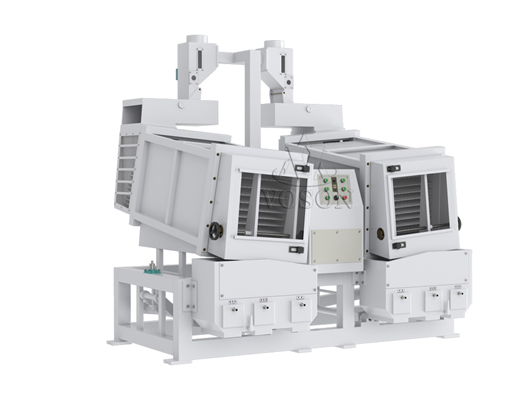
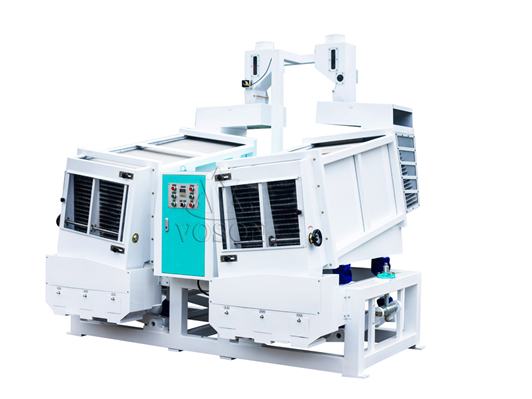
Gravity rice separator is a traditional machine for small rice mills. It uses the difference in gravity and surface friction modulus between rice and brown rice to separate brown rice from grain mixtures.
MGCZ Series Double paddy separator Technical parameter:
Model
MGCZ46*20*2
MGCZ60*20*2
MGCZ80*20*2
Output(t/h)
3.5-5
6.5-7.5
12-16
Power(kw)
2.2
3
5.5
Weight(kg)
1100
1350
1500
Size(L*W*H)
2210*1680*2140
2270*1850*2120
2585*2080*2600
MGCZ Series Double paddy separator Product features:
Double paddy separator use double dody structure,smooth operation,the slight impact of supporting foundation;Both sides of the screen separation effect of good consistency, product performance is stable and reliable. Equipped with automatic stop device,easy operation and reliable.
It has some features:
1、The binary construction makes automatics balance ,thereby the performance is steady,
2、The sieve is made of stainless steel ,thereby the durabiliitly and separate effect is very well.
3、The automatic control device makes the operation convenient.
Double paddy separator: where it fits in a rice mill line
A double paddy separator separates brown rice from unhusked paddy after the huller. It is important because unhusked paddy should return to the huller while brown rice moves forward to whitening and polishing. A well-selected separator improves line balance, reduces repeated milling, and helps protect head-rice yield.
Selection item
Buyer question
Why it matters
Capacity
Does the separator match the huller output and return flow?
A weak separator becomes the bottleneck after husking.
Separation accuracy
How much brown rice remains in the paddy return and how much paddy remains in the brown rice?
Controls yield loss and downstream milling stability.
Deck design
How many decks, adjustment points, and inspection windows are included?
Supports stable operation with different paddy varieties.
Adjustment
Can operators adjust tilt, stroke, feed, and return flow easily?
Allows tuning when moisture, grain shape, or hulling rate changes.
Maintenance
Are wear parts, bearings, drive components, and cleaning access easy to manage?
Reduces downtime during harvest-season operation.
Line integration
Does it connect properly with elevators, huller, whitener, and control system?
Prevents material congestion and inconsistent feeding.
How to compare separator quotations
Ask suppliers to state paddy input, huller capacity, separation efficiency, motor power, deck quantity, control method, spare parts, and installation requirements. A single-body paddy separator may fit smaller lines, while a double separator can suit higher throughput or more stable separation needs. For upstream cleaning, review the rice mill vibrating screen; for hulling, compare the rubber roller huller and rice rubber roller.
For a complete production-line quote, send paddy variety, moisture, huller model, required capacity, voltage, layout and destination through Contact.
Double paddy separator FAQ
What does a paddy separator do?
It separates brown rice from unhusked paddy after husking so each material goes to the correct next step.
When should a buyer choose a double separator?
Choose it when capacity, return flow, or separation stability requires more separation area than a compact separator provides.
What affects separation accuracy?
Paddy variety, moisture, hulling rate, feed uniformity, deck adjustment, vibration, and operator settings all affect results.
What information is needed for selection?
Provide paddy type, hourly capacity, huller model, brown-rice quality target, voltage, layout and installation conditions.
Plan this machine inside a complete rice mill project
A double paddy separator is usually considered when capacity, separation stability or finished-rice quality requires stronger brown-rice separation. Use the resources below to compare equipment with project cost, layout, automation and quotation scope.