You are here:HOME > PRODUCTS > Rice Mill Plant > 200 Ton Rice Mill Production Line: VMTCP-200 Specifications
200 Ton Rice Mill Production Line: VMTCP-200 Specifications
This rice processing equipment can be used to process both long-grain rice and short-grain rice(round rice), suitable to produce both white rice and parboiled rice, with high output rate, low broken rate;
Quick answer: The VOSON VMTCP-200 is presented as a 200 ton-per-day automatic rice mill production line based on 24-hour operation, with a published power range of 350-800 kW. The line can cover paddy cleaning, destoning, husking, paddy separation, whitening, polishing, grading, color sorting, conveying and packing. These are planning values; the approved quotation must define the capacity basis and provide the final machine and motor schedule.
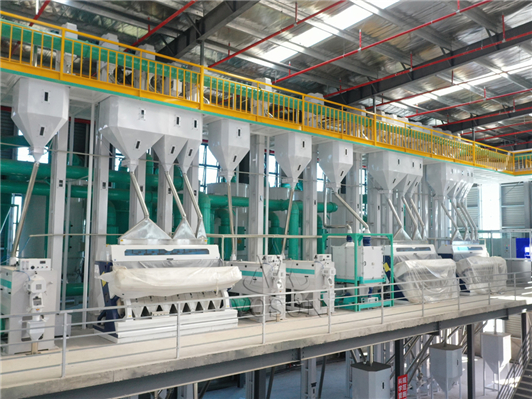
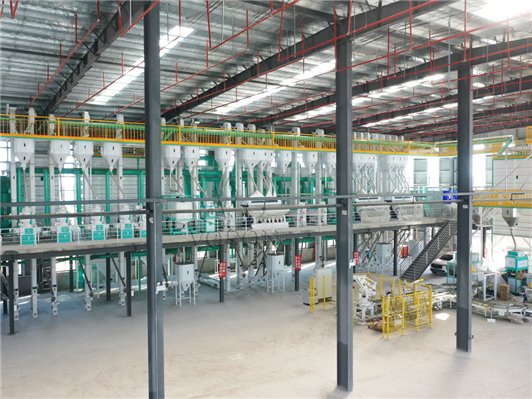
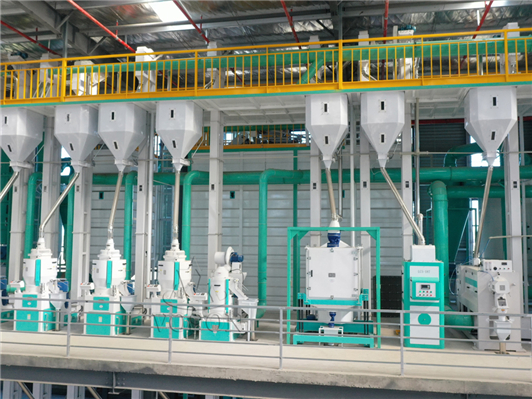
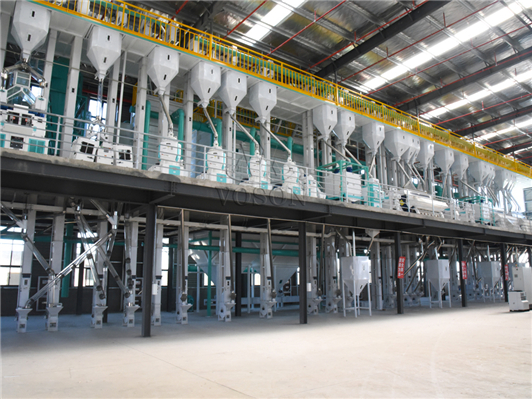
VMTCP-200 rice mill production line. Final equipment arrangement depends on paddy condition, finished-rice specification, building and utility limits.
VMTCP-200 published specifications
Planning item
Published VMTCP-200 value
What the buyer should confirm
Nominal capacity
200 tons per day over 24 hours
Whether capacity means paddy input, finished-rice output or another contractual basis.
Arithmetic hourly average
About 8.33 tons per hour if 200 tons are distributed evenly across 24 hours
Design margin for cleaning, changeover, maintenance and actual operating utilization.
Published power range
350-800 kW
Final connected load, normal running load, transformer, voltage, frequency and backup power.
Process boundary
Raw-paddy feeding through finished-rice packing
Included machines, elevators, bins, platforms, aspiration, dust collection and controls.
Structure
Steel-frame or building-supported arrangement
Local building dimensions, floor loads, maintenance access and foundation responsibility.
Operation
High automation with one or two line operators stated
Total plant staffing for intake, quality control, packing, maintenance, warehouse and supervision.
Engineering note: Dividing 200 tons by 24 hours gives an arithmetic average, not a guaranteed machine throughput. The selected equipment should allow for the agreed operating schedule, paddy condition and downtime. The contract should state the test basis rather than relying only on the words “200 ton.”
200 TPD rice milling process
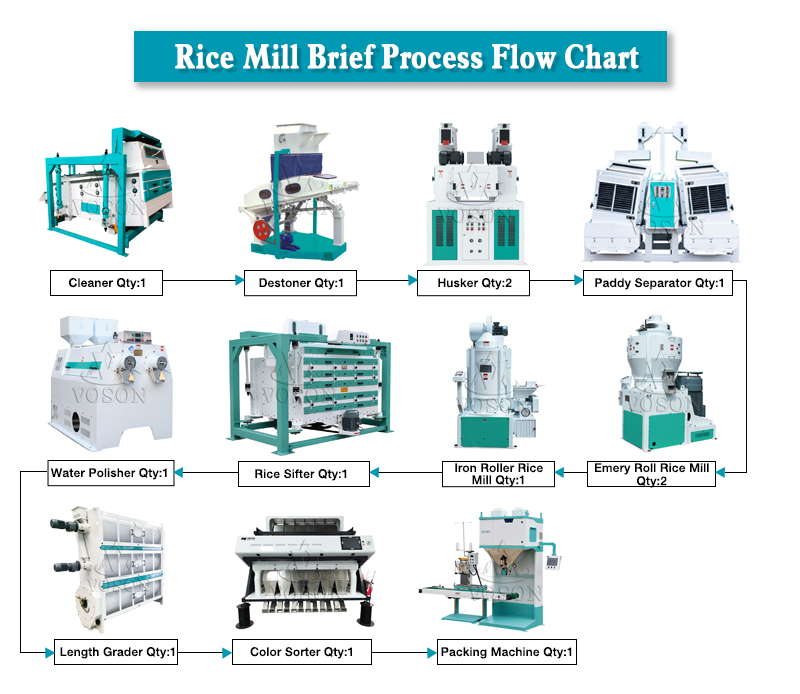
The published process sequence is raw-material feeding, cleaning and destoning, husking, paddy separation, rice milling, polishing, grading, color sorting and packing. Every stage should have enough capacity to avoid becoming the bottleneck of the complete line.
Bag-size range, weighing accuracy, packing speed, sewing and palletizing boundary.
Capacity, paddy and finished-rice assumptions
A reliable proposal begins with the raw material. State paddy variety, moisture range, impurities, expected season and storage condition. The same nominal line can perform differently when long-grain, short-grain, freshly harvested or high-moisture paddy is used.
The finished product specification should state whiteness, polishing level, broken-rice limit, grading fractions, color-sort defects and packing sizes. Optional length and thickness graders should be selected because the market needs them, not simply added to increase the equipment list.
Clarify whether the plant will run continuously for 24 hours or in shorter shifts. A shorter operating day requires a higher hourly rate to achieve the same daily total. The motor and model schedule should be calculated from that actual operating plan.
Power, compressed air and dust control
The 350-800 kW published range is broad because process configurations differ. Ask for a motor list covering process machines, elevators, conveyors, fans, compressors, color sorters, packing machines and auxiliary systems. The electrical design should distinguish connected load from expected simultaneous running load.
Confirm site voltage and frequency before ordering. Also define transformer capacity, distribution panels, cable boundary, power-factor correction, generator backup and the responsibility for local wiring. Color sorting and pneumatic equipment require stable compressed air, while cleaners, elevators and whiteners require properly designed aspiration and dust collection.
Steel structure, building and maintenance access
The VMTCP-200 can be arranged with a steel support structure or integrated into a building. Selection depends on local construction cost, weather, seismic and wind requirements, fire rules, available land and the customer’s maintenance preference.
Before civil work begins, request a dimensioned layout, equipment elevations, floor and foundation loads, pits, openings and maintenance clearances. Leave access for replacing rubber rollers, screens, motors, bearings and major machine components. The quotation should identify which platforms, stairs, handrails, ducts and bins are supplied with the machinery.
Automation and realistic staffing
Automatic feeding, pneumatic huskers, process controls and automatic packing can reduce direct operating labor. However, the statement that one or two workers operate the line should not be treated as the total factory workforce. Intake, laboratory checks, bag handling, warehouse, maintenance, utilities, cleaning and supervision may require additional staff.
Ask the supplier to show the control philosophy, alarm handling, manual bypasses, interlocks and startup sequence. Training should cover adjustment, cleaning, safety, preventive maintenance and troubleshooting, not only normal operation.
Quotation and acceptance checklist
Document
Minimum content
Why it matters
Process flow
Every stage, bypass and return stream
Confirms that the process matches the required rice quality.
Equipment schedule
Model, quantity, rated capacity and motor power
Allows technical comparison between supplier proposals.
Preliminary layout
Dimensions, levels, access, pits and load points
Supports building and installation planning.
Utility list
Power, air, water, ventilation and dust collection
Prevents missing infrastructure after the machinery arrives.
Responsibility matrix
Freight, unloading, erection, wiring, training and trial material
Separates supplier scope from buyer and local-contractor work.
Acceptance protocol
Paddy basis, test duration, throughput, recovery, quality and downtime
Turns a capacity claim into measurable contractual evidence.
Use the rice mill project cost checklist for building, utilities, freight and startup budgeting. The Rice Mill Project Planning Hub organizes the wider workflow. To request a configuration, send paddy data, finished-rice targets, operating hours, packing, voltage, site country and building limits through Contact.
200 ton rice mill production line FAQ
What is the published capacity of the VMTCP-200?
The published basis is 200 tons per day over 24 hours. The quotation should state whether this refers to paddy input or finished-rice output.
How much power does a 200 TPD rice mill require?
The published planning range is 350-800 kW. Final electrical infrastructure must use the approved motor and simultaneous-load schedule.
Which machines are included in the complete line?
The stated scope includes cleaning, destoning, husking, separation, whitening, polishing, grading, color sorting, conveying and packing equipment.
Can the line use a steel structure?
Yes. A steel-frame or building-supported arrangement can be designed, subject to local site, construction and safety requirements.
Can one or two people run the whole factory?
One or two operators may supervise an automated process line, but the complete factory can need additional intake, quality, packing, warehouse, maintenance and management staff.
What should the acceptance test measure?
Record paddy condition, input rate, finished output, milling recovery, broken rice, quality grades, power demand, test duration and downtime.