
2 Ton Rice Mill: Capacity, Machines and Buyer Guide
Quick answer: A 2 ton rice mill can mean two tons of paddy input per hour, two tons of finished rice per hour or two tons of daily production. These are different plant sizes. Before choosing machines or comparing prices, define the capacity basis, paddy condition, operating hours, finished-rice standard, packing method and site utilities.
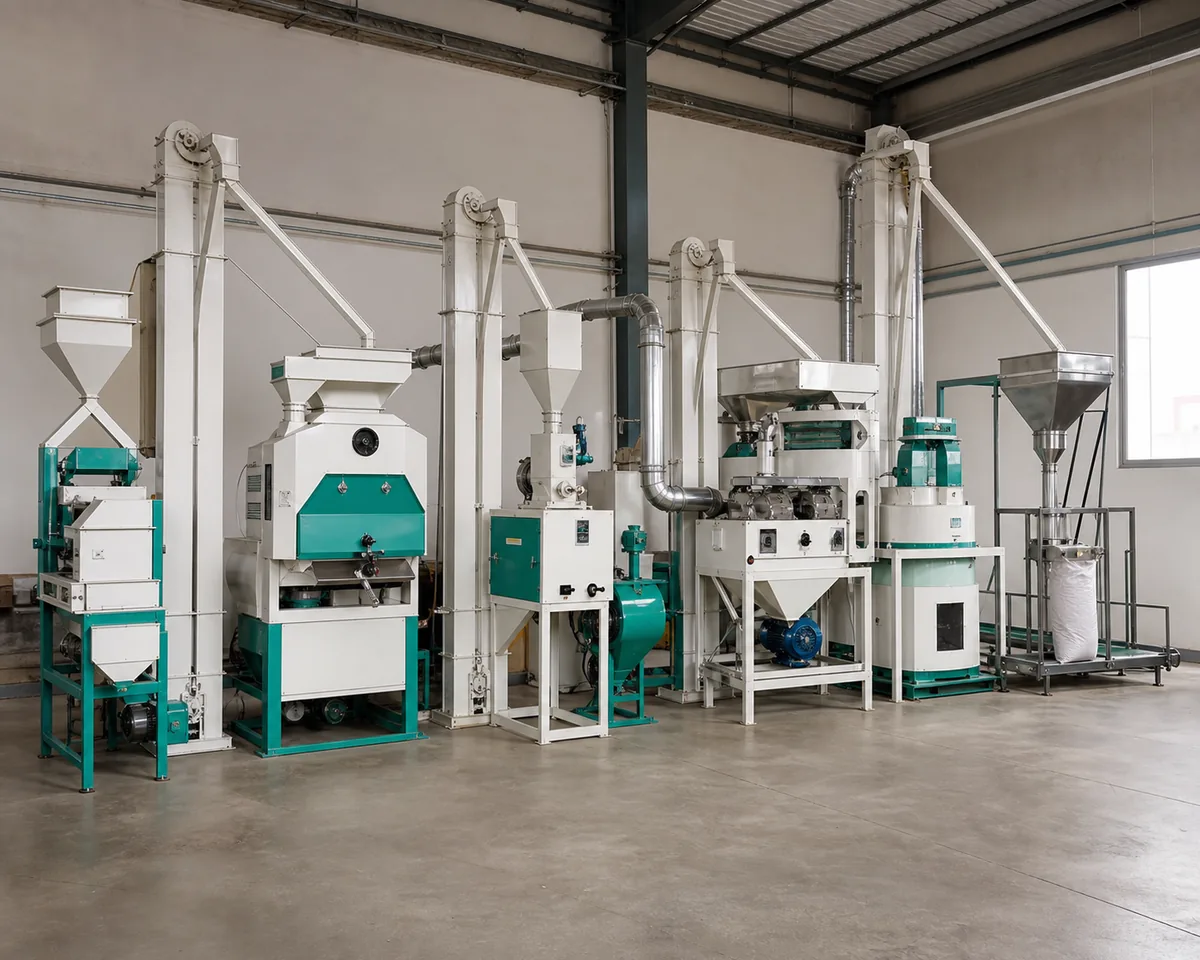
What does 2 ton rice mill capacity mean?
The first question is whether the capacity refers to paddy entering the line or finished rice leaving it. Paddy input produces husk, bran and broken-rice fractions, so finished-rice output is lower than the raw input. Daily capacity also depends on shifts, operating hours, changeovers and downtime.
| Capacity description | Practical meaning | Buyer check |
|---|---|---|
| 2 TPH paddy input | The line receives about two tons of paddy each operating hour. | Ask for expected finished output and recovery assumptions. |
| 2 TPH finished rice | The plant must process more than two tons of paddy per hour. | Confirm every machine is sized for the larger raw-material flow. |
| 2 TPD finished rice | The business needs about two tons of saleable rice per day. | A much smaller line and simpler building may be sufficient. |
| Seasonal 2 ton mill | The plant operates heavily during harvest and less at other times. | Plan storage, spare parts and maintenance for peak use. |
Machines in a typical 2 ton rice mill
A practical line can include a paddy cleaner, destoner, rubber-roll huller, husk aspirator, paddy separator, rice whitener, polisher, grader, elevators, bins and packing machine. Color sorting and automatic packing are added when the target market requires tighter defect control or branded retail bags.
Cleaning protects the huller and downstream equipment. The huller removes husk, while the separator sends unhusked paddy back for controlled reprocessing. Whitening removes bran, polishing improves surface finish, grading separates broken-rice fractions and packing prepares the finished products for sale.
Review the paddy sheller machine guide and rice polishing machine guide for two important process stages. The rice mill machine range shows individual equipment, while the rice mill plant range covers complete configurations.
Basic, commercial and retail-ready configurations
| Configuration | Typical scope | Best suited to |
|---|---|---|
| Basic line | Cleaning, destoning, husking, separation, whitening and simple grading | Local bulk markets and straightforward operation |
| Commercial line | Basic line plus polishing, improved grading, bins and controlled conveying | Consistent appearance and several saleable grades |
| Retail-ready line | Commercial line plus color sorting and automatic weighing and packing | Branded retail or export-quality finished rice |
| Flexible line | Additional bins, bypasses and several packing formats | Multiple rice varieties, grades or customer specifications |
Line balance and expected output
Every stage should be selected from the same input and output basis. A large whitener cannot compensate for an undersized cleaner, huller, separator or packer. Ask the supplier to show rated capacity and expected operating load for each model, including return paddy from the separator.
Output quality should be defined together with capacity. Record paddy moisture and variety, milling recovery, head-rice target, whiteness, broken-rice grades, visible-defect limit and bag sizes. Higher quality may require additional stages or gentler multiple-pass milling, which changes motors, conveyors and floor space.
Building, power and utility requirements
A compact line still needs a dimensioned layout, foundations, maintenance access, safe walkways and routes for paddy, finished rice, husk and bran. Check building height for elevators and gravity flow. Dust collection and ventilation should be planned before installation rather than added after production starts.
Use the supplier's motor schedule to confirm voltage, frequency, transformer capacity, distribution panels, cables and backup power. Color sorters and some packing equipment can require clean compressed air. The buyer should obtain local quotations for construction, power connection, unloading and installation labor.
What a 2 ton rice mill quotation should include
The quotation should contain a process flow, equipment schedule, model numbers, rated capacity, motors, conveyors, bins, platforms, aspiration, controls and spare parts. It should also state manufacturing time, packing, delivery term, documentation, installation support, training and warranty.
Mark every exclusion. Two suppliers may quote different totals because one includes color sorting, automatic packing, dust collection and commissioning while another includes only the main milling machines. Compare the same boundary before choosing by price.
Factory and commissioning test checklist
Agree on the test paddy, moisture, run time and acceptance values before the order. Record input weight, finished output, throughput, milling recovery, broken rice, visible defects, motor loads and downtime after conditions stabilize. Keep input and output samples with the signed result.
Commissioning should also confirm rotation, controls, safety devices, aspiration, dust collection, packing accuracy and operator training. If several paddy varieties will be processed, test the most important or most difficult material instead of assuming one setting fits every crop.
Equipment price versus complete project cost
The machinery quotation is one part of the investment. A complete budget can include land, building, power, freight, customs, unloading, installation, commissioning, spare parts, laboratory equipment and working capital. Use the rice mill project cost checklist to calculate these sections separately.
Buyers comparing nearby capacities can review the 1 ton project cost, 3 ton project cost and 4 ton project cost guides. Capacity should follow realistic paddy supply, market demand, working capital and operating schedule rather than the largest affordable machine.
Daily operation and spare-parts planning
Rated hourly capacity is not the same as daily saleable output. The operating plan should allow time for startup, cleaning, bag changes, product changes, routine adjustment and unexpected stops. Record planned utilization and calculate conservative, normal and strong daily-output cases. Staffing should cover feeding, machine operation, quality checks, packing, material movement and maintenance rather than assuming one operator can manage every stage continuously.
Prepare a first-year spare-parts list from expected operating hours and local delivery time. Common items can include rubber rollers, screens, belts, bearings, seals, polishing parts and packing consumables. Tracking tons processed, breakage, roller use and downtime gives the buyer a better operating-cost picture than the purchase price alone.
How VOSON reviews a 2 ton rice mill
Our review begins with paddy data, required finished output and operating hours. We define the process flow, balance each machine, check building and utility constraints, and separate essential equipment from quality or automation options. The quotation and acceptance test then use the same capacity and product assumptions.
Use the Rice Mill Project Planning Hub for the complete workflow, or send paddy condition, capacity basis, quality target, voltage, destination and site dimensions through Contact. For independent background on milling stages, consult the International Rice Research Institute Rice Knowledge Bank.
2 ton rice mill FAQ
Does 2 ton mean paddy input or finished rice?
It can mean either. The quotation must state the material, hourly or daily period, operating hours and expected milling recovery.
Is a 2 ton rice mill suitable for a small business?
It can suit a small commercial operation when paddy supply, market demand, working capital, utilities and operator skills support the planned output.
Does the basic line include a color sorter?
Not always. Color sorting is normally selected from the visible-defect standard, throughput, compressed-air supply and target market.
How much building space is required?
Space depends on the equipment list, elevator height, storage, maintenance access, packing area and by-product handling. Request a dimensioned layout.
What should be tested before acceptance?
Test throughput, milling recovery, broken rice, finished quality, motor load, packing accuracy and downtime with agreed paddy.
What information should a buyer send for a quote?
Provide paddy variety and moisture, capacity basis, working hours, finished quality, bag sizes, voltage, building limits, destination and service expectations.